

Acoustic Engineer Lloyd Loar
Wiens mandolins are about recreating the feel and sound of the Loar-signed mandolins of the 1920’s. If you’ve ever played one of these legendary instruments, you know the feel and sound can be inspiring! And if you play a really great one, you’ll understand why someone might take a second mortgage to acquire one..Or why someone would spend their time trying to recreate them.
The sound of these instruments is enough to humble any modern instrument maker like myself. But then there’s their beauty. The arching of the plates with their violin F-holes. The crest of the body’s scroll, and that big ornate peghead! The eye-popping sunburst and contrasting bindings. These elements were the culmination of years of development by engineers and craftsmen who are largely forgotten, except for one man whose name is remembered. Acoustic Engineer Lloyd Loar.

Loar’s famous signature inside an F5 mandolin
Loar was a noted musician and acoustic engineer employed by the Gibson mandolin & guitar company in the 1920’s. During his tenure he oversaw the final evolution of the American mandolin as we know it. The Gibson style F5 master model of 1922. For the next two years, Gibson produced over 250 mandolins and guitars that were each approved, signed & dated by Loar himself. His signature eventually becoming an icon in the stringed instrument world. Today they are known to collectors and enthusiasts simply as a Loars.
It’s these instruments and craftsmen I pay tribute to when I build Wiens mandolins. Here’s some notable features of my work.
-Faithful Design
Many of the basic dimensions of Wiens mandolins were taken directly from an F-5, signed by Lloyd Loar on March 31st 1924. Other elements are based on different Loar-signed instruments. For example, it may be a lighter sunburst of a 1922 Loar, or the side-bound body of a mid ’23. I also incorporate lesser-known details such as the off-center neck joint or the dyed pearwood peghead veneer.
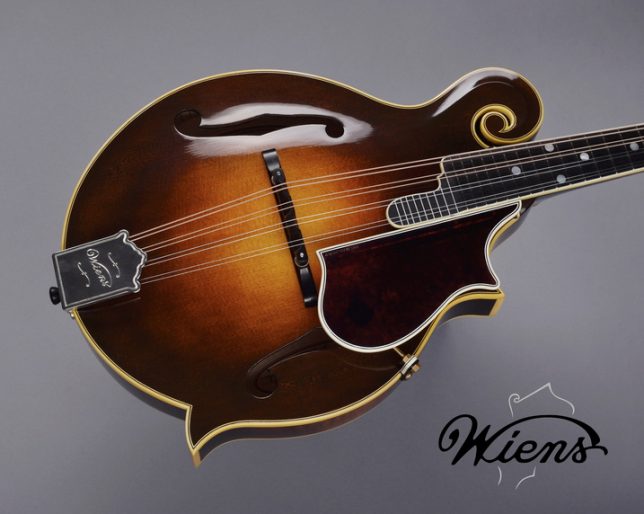
-Captivating Sound
It’s fine to make replicas of a classic mandolin, but the final product also has to sound great. So chasing tone is an ongoing obsession for me. Wiens mandolins are typically well-balanced and responsive with strong upper mids and piano-like highs. They are never woofy or bass-heavy. This Wiens sound is due in large part to the denser materials used in their construction. Starting with the soundboard, I only use the finest Adirondack spruce available. The top and tone-bars of every Wiens mandolin are painstakingly tuned as wood is slowly scraped away. By flexing the wood in my hands and by observing tap tones, I slowly arrive at the ultimate balance of tone and structure for that particular soundboard. The weight of each plate is then observed and recorded. The hard Sugar maple I use for the back, sides & neck is chosen not only for it’s beautiful figure. It’s density allows it to be carved more delicately than other maple species. With backs, the thinner structure results in a more lively mid-range response, and with necks it means they can be carved thinner without losing stiffness. Subtle variations in tone bar placement and graduating treatments mean that every instrument has its own unique voice and character.
-Traditional Build
My approach to building instruments is about putting myself in the shoes of the craftsmen before me. That means using traditional tools and techniques all the way. It’s about laying hands on the wood, and using chisels, planes and scrapers to make the entire instrument. Then using only hot hide glue to assemble it. Fine tuning takes place by painstakingly scraping and testing until the ideal tonal and structural balance is achieved. Finally the stains and finish are rubbed on by hand over a period of weeks. Modern CNC technology is NOT used in any part of my build process.


-All Hot Hide Glue Construction. Difficult to use, but superior to modern wood glues in this application.

–Hand-Applied Color . If you’re like me, you can’t abide “poofy” looking sunbursts.

Adding my Dark brown and blending it until I’m satisfied
– French polished spirit varnish. Incredibly thin, it yields the least muting effect on the wood. It is also highly repairable.

The process is repeated several times. Placing the Varnish by spraying, Scuffing it, followed by french polishing.
–Hand cut inlays. Wiens ain’t about CNC machining. I use a jeweler’s saw and small router.
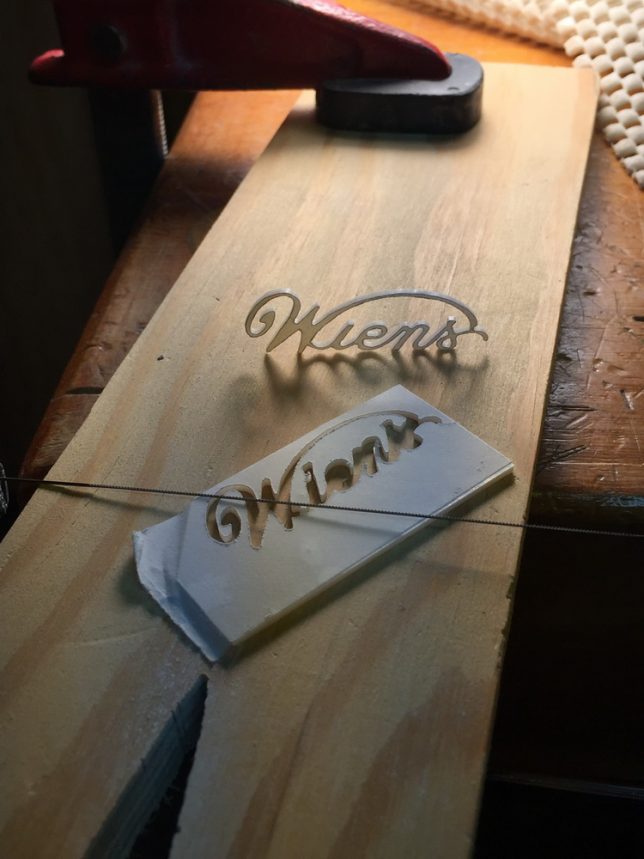
-Traditional Neck Reinforcement & Attachment Wiens mandolins use a traditional single-action truss rod. Besides accurate replicas of the originals, they are effective and have the correct weight. The neck is then joined to the body using a very labor-intensive compound dovetail joint which is very important to the sound of a mandolin.


–Authentic, full-sized binding material. Loars had thicker celluloid binding than we see on contemporary mandolins. Wiens gets his custom made to vintage specs.

The second layer of binding is all lap joints, just like the Loars.Here I’m test-fitting a joint.
-Tortoise position markers on the side of the fingerboard.

– Distinctive pearwood & Holly veneer headplate, blacked over and then carefully scraped to reveal the inlay and binding beneath, exactly how the Loars were done.
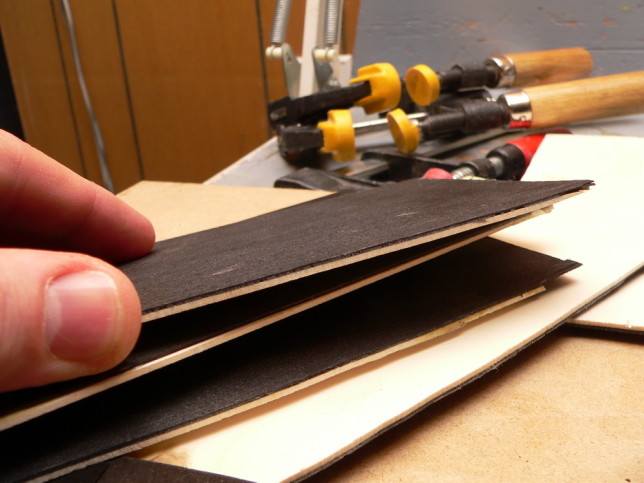
I glue two black-dyed pearwood veneers to a thicker Holly substrate and then clamp them flat overnight.
–Dovetailed bone body points. These are painstakingly let in After the instrument is bound
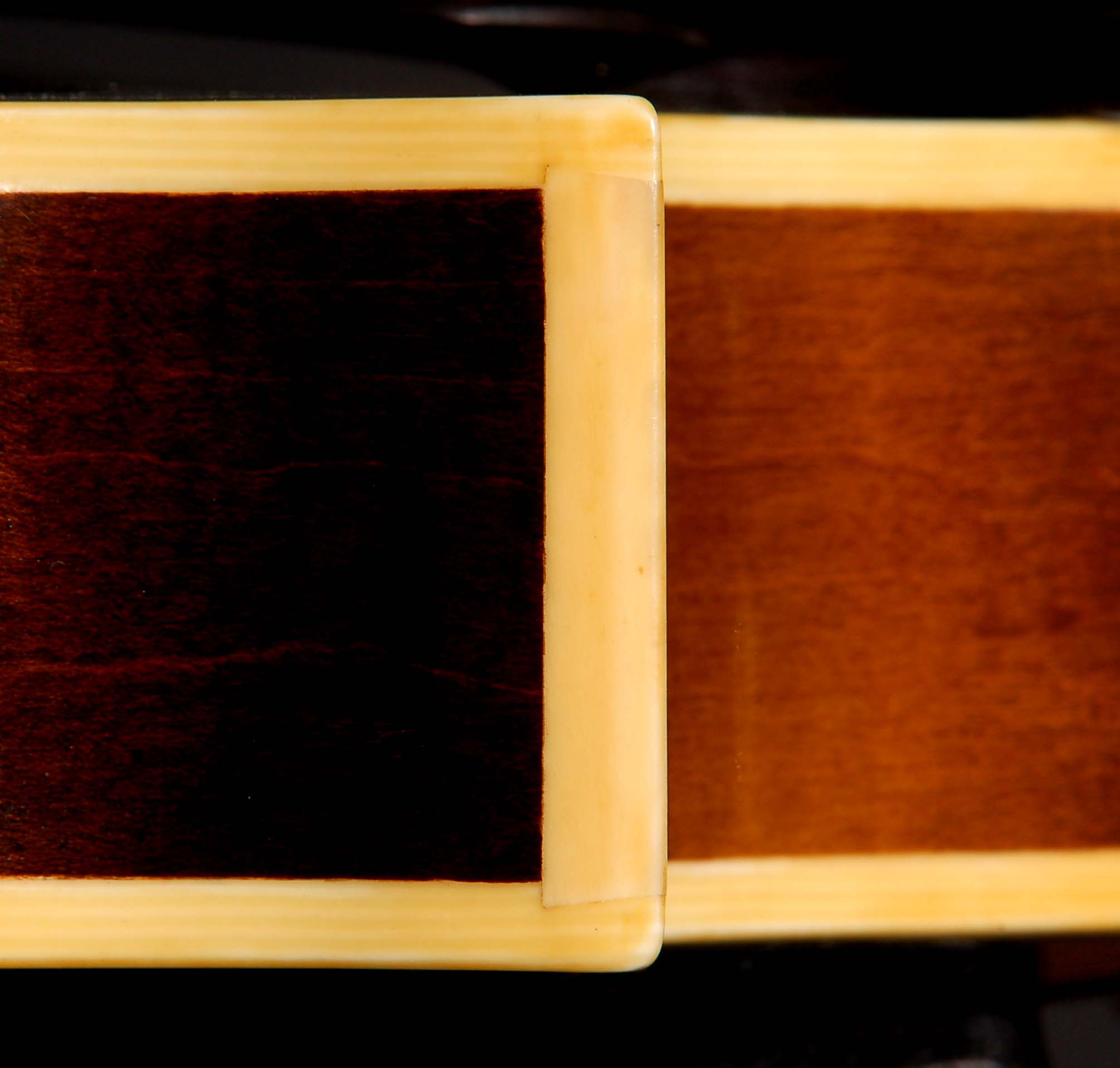
Bone points, dovetailed into the binding.
–Tortoise Celluloid pickguard with replica patent stamp, inlaid steel rod in the reinforcement strip, celluloid mounting block, and authentic silver-plated mounting hardware

Wiens F5 pickguard detail. Patent stamp and inlaid steel reinforcement rod are visible.

Beautifully translucent material. Here you can clearly see the steel rod embedded .
–Wiens reproduction bridge. blacked and polished with replica patent stamp. Stainless posts with silver thumbwheels.

–Old-style fretwork with the binding nibs intact at the fret ends.

-Handmade labels printed on an antique letterpress in the traditional way.

These are just a few of the things that impart that “Vintage Feel” to every Wiens instrument. Thanks for reading!
